
Private Jobs
Ziauddin University Sukkur Campus Jobs 2026 – Faculty Career Opportunities at Ziauddin Medical College Full Time
Meta Description:
Ziauddin University Sukkur Campus has announced multiple faculty job openings for Basic Health Sciences and Clinical Health Sciences departments. Check available positions, eligibility criteria, departments, application process, and practical tips for applicants.
Ziauddin University Sukkur Campus Faculty Jobs 2025
Academic jobs in the medical education sector are becoming increasingly competitive, especially in institutions that focus on research, clinical exposure, and professional growth. One of the latest opportunities attracting attention is the faculty recruitment drive announced by Ziauddin University for its Sukkur Campus.
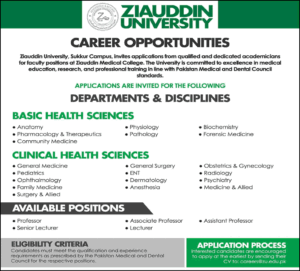
The university is inviting applications from qualified and experienced academicians for positions at Ziauddin Medical College. The advertisement clearly highlights that the institution is looking for dedicated faculty members who can contribute to medical education, research, and professional training according to Pakistan Medical and Dental Council standards.
For professionals already teaching in medical colleges, or doctors planning to move into academics, this recruitment could be a strong career move. The range of departments also makes these openings suitable for both senior and mid-level faculty candidates.
About Ziauddin University
Ziauddin University is one of Pakistan’s recognized private sector medical universities. Over the years, it has developed a reputation for healthcare education, medical research, and clinical training programs.
The Sukkur Campus expansion reflects the growing demand for quality medical education in interior Sindh. Institutions opening campuses outside major metropolitan cities often provide strong opportunities for professionals who want leadership roles, stable academic careers, and long-term institutional growth.
Medical universities today are not just looking for people who can deliver lectures. They usually prefer candidates who can:
- Handle academic administration
- Participate in curriculum development
- Supervise research
- Mentor students professionally
- Assist with accreditation standards
- Build departmental strength
That seems to be the direction this hiring campaign is targeting as well.
Departments Announced in the Advertisement
The university has divided vacancies into two major categories:
- Basic Health Sciences
- Clinical Health Sciences
This wide departmental coverage suggests that the institution may be strengthening multiple years of its MBBS and related medical programs simultaneously.
Basic Health Sciences Departments
The following departments are included under Basic Health Sciences:
Anatomy
Faculty in Anatomy departments are generally involved in teaching gross anatomy, histology, embryology, and practical dissection sessions. Candidates with strong teaching backgrounds and postgraduate specialization in Anatomy are likely to fit well.
Physiology
Physiology faculty members usually teach body functions, organ systems, and laboratory practicals. Experience with integrated modular teaching can be useful here.
Biochemistry
Biochemistry departments in medical colleges often require faculty capable of handling both theory and lab sessions. Research publication experience can strengthen applications in this field.
Pharmacology & Therapeutics
This department is important in modern medical education because rational drug therapy and prescription training have become more emphasized in recent years.
Candidates with clinical integration experience may stand out.
Pathology
Pathology teaching combines laboratory sciences with disease mechanisms. Institutions usually value applicants who can support both diagnostics and academic activities.
Community Medicine
Community Medicine remains one of the most significant areas in Pakistan’s healthcare education system due to public health challenges.
Applicants with epidemiology, field research, or healthcare policy experience may have an advantage.
Forensic Medicine
Forensic Medicine is a specialized field, and experienced faculty can sometimes be difficult to find. Candidates with medico-legal expertise and teaching experience should seriously consider applying.
Clinical Health Sciences Departments
The advertisement also lists a large number of clinical departments.
General Medicine
Internal Medicine faculty are usually involved in ward teaching, clinical rounds, case discussions, and patient-based learning.
Teaching hospitals attached to universities often prefer candidates with active clinical practice backgrounds.
Pediatrics
Pediatrics faculty members work closely with undergraduate medical students during child health rotations.
Strong communication skills matter a lot in this specialty because teaching often involves both parents and students in clinical settings.
Ophthalmology
This specialty may involve both OPD-based teaching and practical clinical demonstrations.
Family Medicine
Family Medicine is gradually gaining stronger academic recognition in Pakistan. Candidates with primary care and preventive medicine backgrounds may find good opportunities here.
Surgery & Allied
This department may include multiple subspecialties depending on institutional requirements.
Candidates with teaching hospital exposure generally perform better during faculty evaluations.
General Surgery
General Surgery faculty positions are often demanding because universities expect balance between teaching, clinical duties, and academic development.
ENT
ENT departments usually require faculty capable of managing both outpatient teaching and operative exposure for students.
Dermatology
Dermatology remains a highly sought-after specialty. Academic positions in this field can provide balanced clinical and teaching careers.
Anesthesia
Anesthesia faculty often contribute significantly to operation theatre teaching and perioperative training.
Obstetrics & Gynecology
OB/GYN departments in medical colleges are among the busiest clinical units. Faculty members typically handle clinical teaching, emergency training, and ward supervision.
Radiology
Radiology teaching has evolved rapidly with digital imaging technologies. Candidates familiar with modern imaging systems and academic teaching methods may have stronger prospects.
Psychiatry
Mental health education is receiving increasing attention in medical training. Psychiatry faculty are becoming more important in undergraduate education programs.
Medicine & Allied
This category may include subspecialties linked with internal medicine disciplines.
Available Positions
The advertisement mentions the following faculty designations:
- Professor
- Associate Professor
- Assistant Professor
- Senior Lecturer
- Lecturer
This is useful because applicants from different career stages can apply.
A fresh postgraduate doctor may qualify for Lecturer or Senior Lecturer positions, while experienced academicians with PMDC-recognized teaching experience may target senior ranks.
Eligibility Criteria Explained in Simple Words
The advertisement states that candidates must meet the qualification and experience requirements prescribed by the Pakistan Medical and Dental Council (PMDC).
In practical terms, this usually means applicants should have:
- Relevant MBBS or equivalent medical qualification
- Recognized postgraduate degree in the relevant specialty
- PMDC registration
- Required teaching experience for the position applied for
- Research publications where applicable
- Experience in recognized institutions
For senior roles like Professor or Associate Professor, publication records become very important.
Many candidates underestimate the importance of properly documented teaching experience. Universities usually verify experience certificates carefully, especially for higher faculty ranks.
Who Should Apply for These Jobs?
These opportunities may suit:
Experienced Medical Faculty
Doctors already teaching in medical colleges and looking for career progression may find these roles attractive.
Specialists Transitioning Into Academics
Some clinicians eventually prefer academic environments over purely hospital-based practice. This recruitment offers that possibility.
Professionals Returning to Interior Sindh
A lot of medical professionals working in Karachi, Lahore, or Islamabad eventually consider moving closer to their hometowns or families. Sukkur Campus opportunities may fit those plans.
Early-Career Academicians
Lecturer and Senior Lecturer roles can help younger doctors establish long-term academic careers.
Why Medical Faculty Positions Matter Long-Term
Many doctors initially focus only on private clinical practice, but academic careers provide several long-term benefits:
- Structured career growth
- Research opportunities
- Stable institutional roles
- Professional networking
- Exposure to conferences and academic collaborations
- Mentorship opportunities
- Better work-life balance in some specialties
Of course, academic careers also come with pressure. Faculty members often juggle lectures, ward rounds, student mentoring, meetings, assessments, and research responsibilities simultaneously.
Still, for people who genuinely enjoy teaching, the environment can be professionally rewarding.
Work Environment Expectations
Although the advertisement does not mention detailed workplace conditions, medical universities generally expect faculty to contribute beyond classroom teaching.
Typical responsibilities may include:
- Conducting lectures
- Supervising practical sessions
- Participating in examinations
- Curriculum planning
- Student mentoring
- Research activities
- Clinical supervision
- Accreditation preparation
One thing applicants sometimes overlook is adaptability. Institutions expanding into newer campuses often evolve quickly, and faculty members may need flexibility during initial operational phases.
Salary Expectations and Benefits
The advertisement does not specify salary packages.
However, faculty salaries in recognized private medical universities in Pakistan often depend on:
- Academic rank
- Specialty demand
- Experience
- Research profile
- Administrative responsibilities
- Clinical involvement
Specialties like Radiology, Surgery, Anesthesia, and Dermatology sometimes command stronger compensation due to market demand.
Apart from salary, universities may also offer:
- Provident fund
- Medical facilities
- Research support
- Academic allowances
- Conference participation opportunities
- Promotion pathways
Applicants should discuss these details professionally during interviews rather than making compensation the opening topic.
Common Mistakes Applicants Make
A surprising number of qualified doctors lose opportunities because of avoidable errors.
Sending Incomplete CVs
Many academic CVs lack:
- Publication details
- PMDC registration number
- Teaching experience duration
- Research activities
- Conference participation
A well-structured CV matters a lot in faculty hiring.
Applying Without Matching PMDC Criteria
Some candidates apply for senior positions without meeting publication or experience requirements.
This usually wastes time for both the applicant and the institution.
Weak Email Communication
Since applications are submitted through email, professionalism matters.
Emails like “Sir plz find CV” without subject lines or proper attachments create poor first impressions.
Ignoring Documentation
Candidates should keep scanned copies ready of:
- Degrees
- Experience certificates
- PMDC documents
- CNIC
- Publications
- Training certifications
Universities may request them quickly during shortlisting.
Practical Tips Before Applying
Tailor Your CV
Do not send a generic resume.
If applying for Pathology, mention laboratory teaching, diagnostic exposure, and publications related to pathology.
Highlight Research Work
Even small research contributions can strengthen applications, especially for senior academic ranks.
Mention Teaching Experience Clearly
Write exact timelines and institutions.
For example:
- Assistant Professor – XYZ Medical College – 2020 to 2024
Avoid vague wording.
Use Professional Email Formatting
Your application email should include:
- Position applied for
- Department name
- Short professional introduction
- Attached documents list
Simple professionalism goes a long way.
How to Apply
The advertisement instructs interested candidates to send their CVs via email.
Application Email
Applicants should ideally mention:
- Desired department
- Position applied for
- Academic qualifications
- Current designation
in the email subject or body.
Since no deadline is visible in the advertisement, early application is strongly recommended.
Delaying applications is a common mistake. Universities sometimes begin shortlisting before official deadlines if they receive strong profiles early.
Suggested Documents to Prepare
Before applying, prepare these documents in PDF format:
- Updated CV
- PMDC registration certificate
- Educational degrees
- Experience letters
- Research publications list
- CNIC copy
- Recent passport-size photograph
Naming files properly also helps.
For example:
- Ahmed_Khan_CV.pdf
- PMDC_Certificate.pdf
instead of random file names.
What Interview Panels Usually Focus On
Medical university interviews often evaluate more than academic degrees.
Panels may ask about:
- Teaching methodology
- Clinical teaching approach
- Research interests
- Student management
- Curriculum integration
- Assessment techniques
For senior roles, administrative understanding may also matter.
Candidates sometimes prepare only specialty knowledge and forget teaching-related discussions.
Academic Growth Opportunities
Joining a growing medical campus can sometimes provide faster advancement opportunities compared to highly saturated institutions.
Faculty members who actively contribute in:
- curriculum development,
- accreditation preparation,
- student mentorship,
- departmental administration,
often progress more quickly.
This is particularly relevant in expanding campuses where institutions need committed long-term faculty.
Frequently Asked Questions (FAQ)
What positions are available at Ziauddin University Sukkur Campus?
The university is hiring for:
- Professor
- Associate Professor
- Assistant Professor
- Senior Lecturer
- Lecturer
positions across multiple medical departments.
Which departments are included in the recruitment?
Departments include:
Basic Health Sciences
- Anatomy
- Physiology
- Biochemistry
- Pharmacology & Therapeutics
- Pathology
- Community Medicine
- Forensic Medicine
Clinical Health Sciences
- General Medicine
- Pediatrics
- Ophthalmology
- Family Medicine
- Surgery & Allied
- General Surgery
- ENT
- Dermatology
- Anesthesia
- Obstetrics & Gynecology
- Radiology
- Psychiatry
- Medicine & Allied
Is PMDC registration required?
- Yes, candidates are expected to meet the PMDC qualification and experience criteria for the respective faculty positions.
Where is the job location?
- The positions are based at the Sukkur Campus of Ziauddin University.
How can applicants submit their applications?
- Interested candidates should send their CVs to:
- careers@zu.edu.pk
Is teaching experience necessary?
- For most faculty roles, especially senior positions, teaching experience is generally required according to PMDC regulations.
Are fresh graduates eligible?
- Fresh postgraduate candidates may qualify for Lecturer or Junior-level academic roles if they meet institutional requirements.
Does the advertisement mention salary details?
- No, salary packages are not mentioned in the advertisement.
Are research publications important?
- Yes. Publications are particularly important for higher academic ranks such as Associate Professor and Professor.
Should applicants apply early?
- Yes. Early applications are usually beneficial because institutions may start reviewing profiles before final deadlines.
Medical education careers are not for everyone. The workload can be demanding, and balancing clinical duties with teaching requires patience. But for doctors who enjoy mentoring students, discussing cases, and contributing to academic growth, opportunities like these can become meaningful long-term career steps.
Job Overview
-
Date Posted:
-
Location: Jobs in Sukkur, Sindh
-
Job Title: Ziauddin University Sukkur Campus Jobs 2026 – Faculty Career Opportunities at Ziauddin Medical College
© Team TechyOP. All Rights Reserved.